
Davos: CEOs warn of business risk from reputation shortfalls
A study of more than 3,000 C-suite leaders finds reputation is now a material business risk, while warning that many CCOs lack the mandate, insight and commercial alignment to manage it effectively.
Reputational weaknesses are increasingly translating into commercial consequences, from lost revenue and valuation pressure to slower crisis recovery and talent challenges, according to new global research unveiled this week in Davos.
The Reputation Capital Scorecard 2026, based on a survey of more than 3,000 C-suite executives across 27 markets, finds that 78% of CEOs say reputational weaknesses have impacted company trading over the past year, while 72% believe reputation is critical to commercial success.
Yet fewer than half of organisations believe they are living up to stakeholder expectations, and only 40% say they are well prepared to manage the reputational impact of AI.
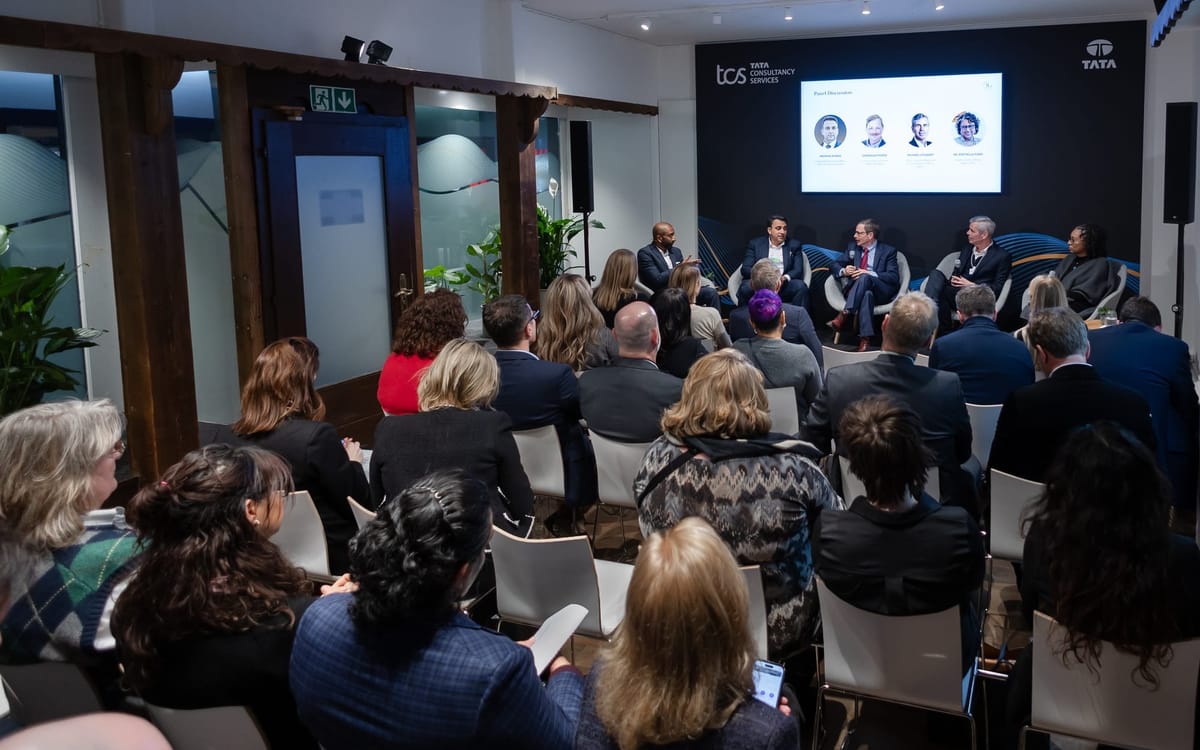
Led by Sandpiper Research & Insights, in partnership with Earned First and the Page Society, the research draws on input from the Reputation Capital Council, a group of more than 70 leaders from global corporate affairs, communications, marketing and sustainability functions. The findings were unveiled yesterday during a panel discussion in Davos hosted by TCS.
The tensions uncovered by the research were a recurring theme during the discussion, where senior corporate affairs, communications and public affairs leaders debated whether a growing confidence gap between CEOs and communications leaders reflects optimism at the top, or a potential disconnect with reality. CEOs are almost twice as likely as CCOs to feel personally responsible for corporate reputation and are also consistently rate reputation strength, agility and alignment higher than CCOs do.
"Isn’t that the job, to be the voice of doom?" asked TCS global CMO Abhinav Kumar, reacting to the finding that CEOs consistently rate reputation strength, agility and alignment higher than chief communications officers. "If you want to be more diplomatic, be the consigliere. You’re the one with line of sight on what’s happening inside the organisation and outside, and you have a responsibility to say what’s coming down the street, and what it could cost you commercially."
More than one panellist argued that any disconnect is less about CEOs being naïve than about how information flows upward. Workday corporate affairs VP Chandler Morse, reflecting on time spent working for an elected official, said leaders often receive a distorted picture of reality.
"No one wants to tell them the bad news," said Morse, adding that numbers alone rarely resolve that tension. "Everyone wants the metrics. ‘What are we going to get for this?’ And the honest answer is sometimes: I don’t really know. A lot of it comes down to trust — separating signal from noise, and having a relationship where the CEO will listen.'"
That lack of clarity becomes more problematic, suggested Unilever chief corporate affairs and communications officer Michael Stewart, when reputation is discussed in generic terms rather than as a business lever, with many CEOs also conflating their own personal reputation with that of the company.
"They project their own reputation as strong and assume the company’s is the same," said Stewart. “ We're still too generic in the reputation conversation. We need to really drill it down into the business strategy, [how] we're going to unlock value or protect value."
The research suggests those gaps are compounded by reporting choices. Fewer than four in ten organisations currently have their chief communications officer reporting directly to the CEO, even though top reputation performers are 16 points more likely to preserve this reporting line.
Even so, panellists cautioned against treating reporting lines as a perfect solution. "We make too much out of the reporting relationship," said Kumar. "At the end of the day, what matters is the culture of the company. If you have a culture of collaboration, it doesn’t matter where the role sits. Our CCO reports to me, but he works day in and day out with the CEO, with anyone in the C-suite. It’s how you operate."
Others argued reporting lines are still a useful signal, but only if the capability exists. "If you don't have that mindset or the skillset to earn that seat, then you don't belong there," said Page CEO Dr Rochelle Ford. "When you report to the CEO, you’re a strategic business partner. But if you don't have the access, it doesn't matter what you know because you're not going to be able to provide that strategic counsel."
Another key finding from the report is that CCOs are less likely than CEOs to be aware of bottom-line business impacts driven by reputational weaknesses. "Too often people in senior communications roles don’t have the business or financial acumen,” said Stewart. “They’re delivering work, but that’s not the same as delivering growth outcomes. CEOs know the business. That's a mindset shift, and I think we all need to skill up on that."
This challenge is amplified by the finding that insights is the weakest link in reputation management. On average, companies score 55 out of 100 on insights, compared with 70 for resources, with insights emerging as the single biggest differentiator of effectiveness.
"If you’re not measuring it, you cannot begin to contribute to it," said Ford, citing further research from Page. "Less than 40% of communications leaders are measuring ties to revenue, less than 25% to profit, less than 20% looking at share price. Many of them have no say in investor relationships."
Unsurprisingly, AI loomed large throughout the discussion, both as a reputation risk and a business accelerator. "Search is still the most trusted channel, but AI tools are now the fastest-growing in both use and trust," said Ford, noting how AI is also turning cybersecurity, disinformation and internal data exposure into direct reputation threats. "Ransomware is reputational risk. Phishing is reputational risk. If you’re not best friends with your chief information security officer, you’re not managing for tomorrow."

Comments ()