"How are you aligning to the national agenda?" | Trust Corridors Roundtable
Earned First and Edelman convened communications and public affairs leaders from Asian businesses to test new research into how country of origin shapes commercial trust.
As economies fragment in a more multipolar world, companies are finding very different levels of trust, policy friction and stakeholder permission from one market to the next. Edelman's new Trust Corridors framework, accordingly, scores how a company's country of origin shapes its licence to operate in a given destination market and sector.
The good news, perhaps, is that of 57 Asia-origin corridors analysed, only a small minority are genuinely "narrow", with access remaining available, even if terms are increasingly defined on a market-by-market basis. Two structural signals, country trust, and domestic trust advantage (how much more a market trusts its own brands over foreign ones), sit alongside three more dynamic factors in the Trust Corridors model: media pressure, policy pressure and the strength of local partnerships.
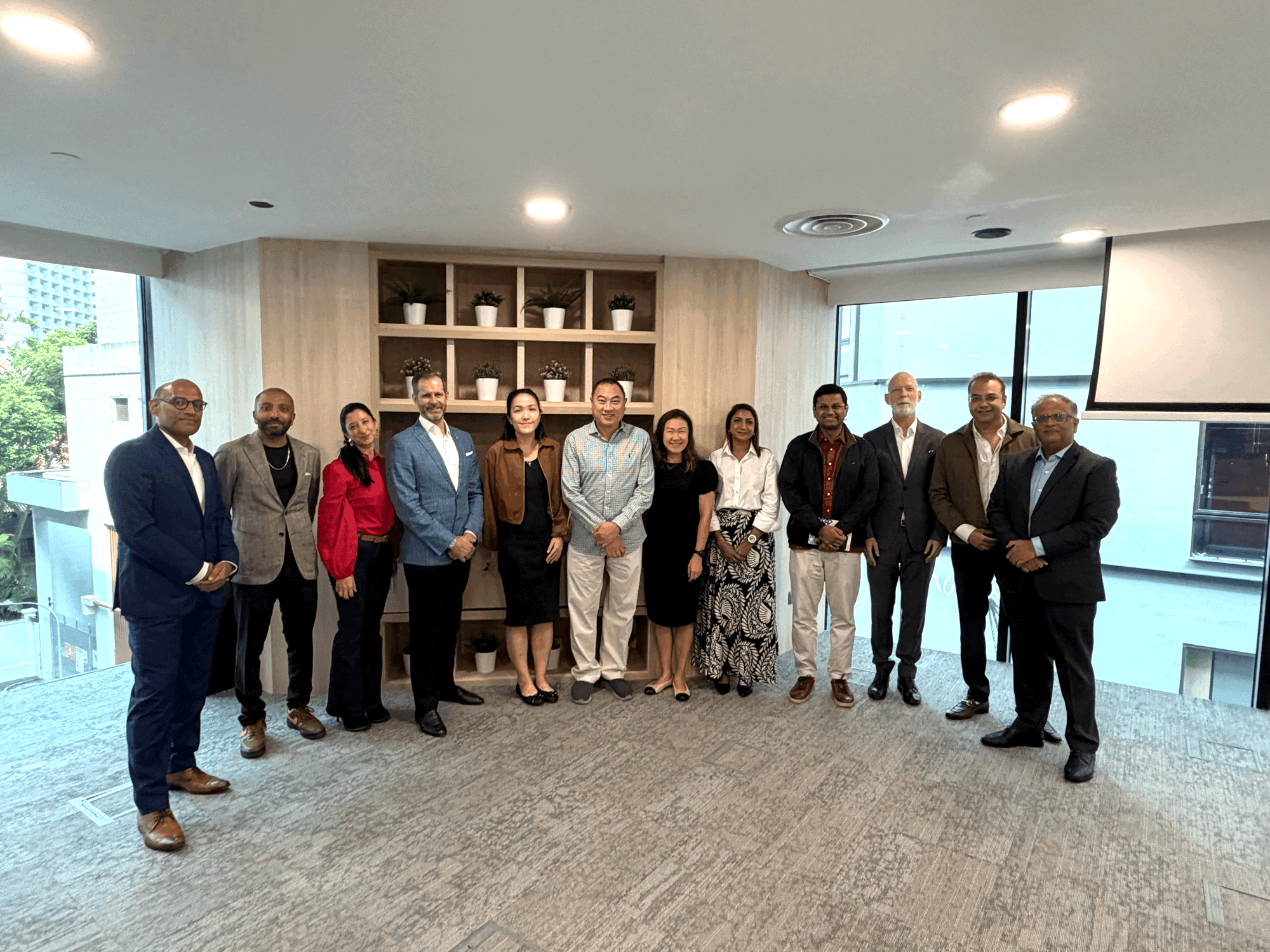
To examine what all of this means in practice, Earned First and Edelman convened a roundtable of communications and public affairs leaders from Asian companies in Singapore last week. The room's own experiences confirmed the framework's central finding but also explored some of the key challenges. Several markets, for example, want foreign capability, but are growing more wary of foreign dependency. Credible local partners help, but the most visible problem — media pressure — often serves to distract attention.
The discussion that followed was candid, occasionally pushing back on the framework's conclusions. What follows is that conversation, edited for length and clarity.