
PRAXIS MENA: Context and earned trust vital to strengthening UAE reputation
Despite a broadly positive perception, the country must find a way to combat "conspiracy theories" and win over neutral observers around the world.
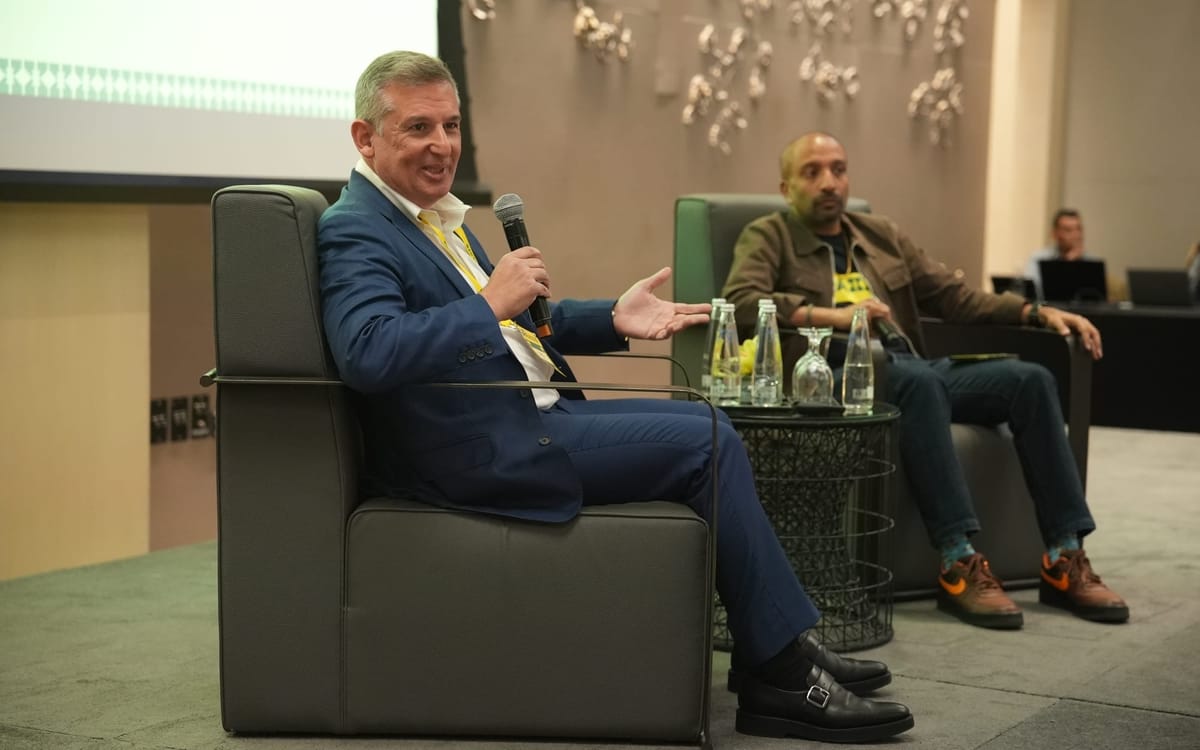
As media coverage of the UAE increases, the country must work to address negative sentiment and missed opportunities to highlight its appeal. That was the message from Mazen Nahawi, founder and group CEO of CARMA, to attendees of PRAXIS MENA in Abu Dhabi on Tuesday.
Nahawi detailed findings from CARMA's latest UAE reputation report, which assessed the nation's standing in mainstream and social media and public opinion across 19 markets. Journalistic coverage of the UAE rose 8% in 2025 compared to the previous year to 175k articles, with business and economy and diplomacy and governance the main drivers respectively. This contrasted notably with social media, where tourism, culture, sports, media and religion were the dominant themes with 49% share.
Nahawi expressed surprise that these areas and in particular human capital and society received relatively little attention from journalists (35% and 12% respectively). "If you're a UAE government member, [those numbers] have to change," he said. But he added that it would be a mistake to see either journalism or social media alone as representative of reputation. "You have to combine them."
Overall, discussion around the UAE was positive: 81% of mainstream media stories and 73% of social media posts were favourable. But Nahawi warned that the UAE must not ignore negative sentiment and its drivers, which include the perception of civil rights and political freedom. "A lot of negativity comes from there even though it's only 2% of coverage," he said. "We need to find a way to make that change."
Particularly on social platforms like TikTok, "powerful conspiracy theories are going to the heart of the country's reputation," Nahawi warned. "I've never seen anything like it and it's a real danger to the country."
Taxation is increasingly likely to contribute to negative sentiment, he predicted. Crime has also become a bigger topic with a 5% share of media coverage. For communicators telling the UAE's story, it's vital to provide context around these themes, which are part and parcel of the country's maturation as a first world economy. "The contextual story is not told clearly enough, and the more of that there is, the better," he said.
The Ministry of Economy emerged as a key driver of coverage. Yet while the ministry itself was present in 54% of coverage, ministers themselves accounted for just 1%. "A lot of the country's reputation is driven institutionally, not through force of personality," he noted.
In terms of public awareness and perception of the UAE, 28% know next to nothing about the country, a finding Nahawi called "astounding". Twenty-two percent showed a high level of knowledge, with the five best informed countries all from Asia. People's willingness to do business in the UAE and relocate there stood at 57% and 43%, "lower than five years ago".
Public positive perception was also lower than in the media at 58% — a 23 percentage-point disparity. "As a communicator, you have to address that; know what the reasons are and take care of it," he urged, adding that personal experience is the top source of positive perception at 61%.
By contrast, despite receiving considerable investment, influencers "are among the least effective credibility and reputational drivers for the country" at 33%. Blog posts and advertising similarly fail to influence public opinion.
Nahawi said it was important to cultivate those with a neutral stance on the UAE. "Any percentage point of people you can win over to your side could translate to billions in GDP." At the same time, it is crucial to find a way to break "untrue" and negative narratives about the UAE, which influencers — ironically — play a much bigger role in spreading.
He expects paid efforts to strengthen the UAE's reputation to have a decreasing level of impact over time. "Trust is not something you can buy," he said. "The truism that you have to earn it remains true. We build trust by sharing wisdom and judgement, and paid media simply cannot do that."

Comments ()