
Roundtable: The Narrative Crisis
Earned First and Zeno convened in-house comms leaders in Singapore to examine what it means to lead communications when narratives move faster than organisations can respond.
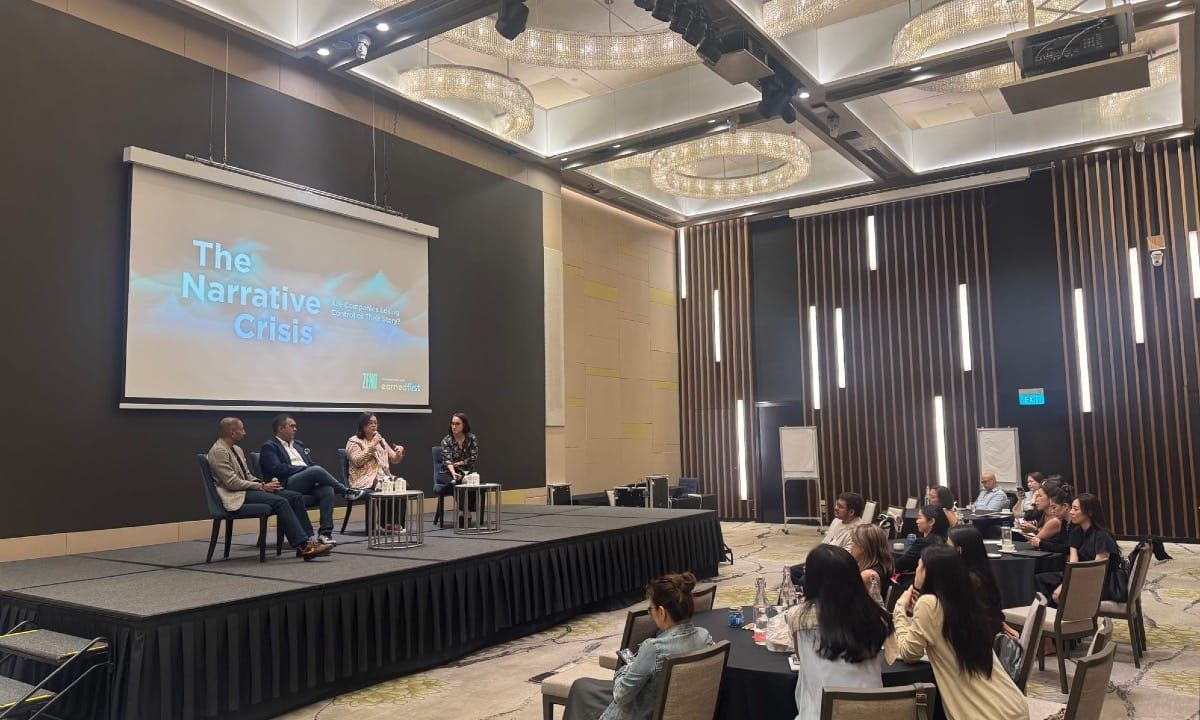
If narratives are now co-authored by algorithms, activists, employees, AI summaries, and geopolitical context, often faster than organisations can process or respond, what does it mean to lead communications?
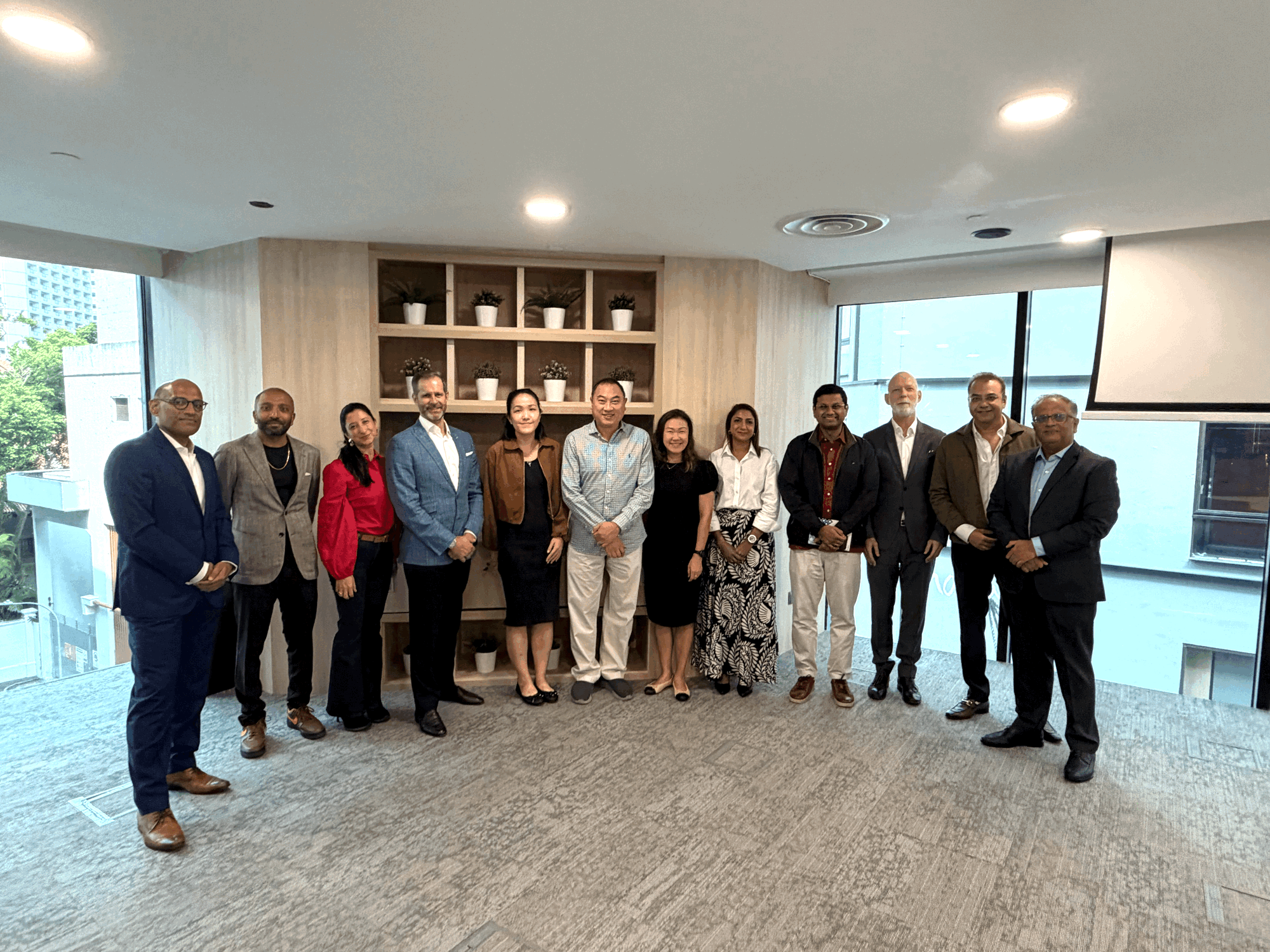
It's the kind of question that has been vexing many of our brightest communications minds in recent times, including 20 senior in-house marcomms leaders convened by Zeno Group and Earned First in Singapore earlier this week. The discussion was led by Bridget O'Donovan, head of communications at Meta; AmCham Singapore CEO Hsien-Hsien Lei, and Khushil Vaswani, managing director of Zeno Group Singapore.
Three data points from Zeno's Clarity 2030 research study helped set the scene. 67% of Asia-Pacific communicators believe AI engines will have the greatest impact on shaping audience trust by 2030, above corporate leaders, algorithms, and creators. Four in five say earned media is now more important than before. And while 81% expect their roles to require entirely new skill sets, only one third feel their organisations are ready for that transformation.
The 'perma-crisis' question
Every generation of communicators has faced a version of this moment, whether in terms of the rise of 24-hour news, the emergence of social media, or the fragmentation of media ownership. But today's information revolution is striking in its speed and impact, even the panel was circumspect about the word "crisis" itself.
"When everything is a crisis, nothing's a crisis," said Vaswani. The fundamentals of communication, he argued, have not changed: narratives were always going to be interpreted differently by different audiences, brands were always going to struggle to control the conversation once it left their hands. What has changed is visibility. "For many, many years, we didn't have full visibility of how that narrative was seen. Now we do."
That visibility cuts both ways. "The fragmentation is exhausting because it's scattered and it's everywhere and it's the speed," said O'Donovan. "Things are happening, and it gets repurposed, AI remixes it, there's more commentary, more opinion. The volume of content is overwhelming." The first instinct, she observed, is to push back, to counter, to accelerate. The more useful response is almost the opposite: "to take a moment, look at who's important and be really focused and intentional about what we're doing."
Narratives in the age of LLMs
The algorithmic era, whether Facebook's suppression of organic reach or LinkedIn's opaque distribution model, forced comms teams to think in terms of platform optimisation. The LLM era is doing something different, and potentially more consequential, by reshaping how audiences discover and evaluate information, often without any visibility into the weighting being applied.
The early evidence suggests earned media has a stronger signal in AI-powered discovery than other media types. In theory, this is good news for communications professionals. But we are yet to understand why, or how durable that advantage is, even as paid content begins to enter AI-mediated environments.
When Google emerged, noted Lei, people read and believed everything on the first page. Over time they learned to distinguish reputable sources from noise. "I think AI is going through the same thing, especially because now at the very top of our search page is an AI summary." The generation most exposed to AI-generated content, she argued, is also the most sceptical of it. "Gen Z, they're not freaked out at all. They're much more savvy than we are." The implication is that the credibility crisis around AI-mediated information may be self-correcting, but not yet, and not on any timetable useful to organisations navigating it today.
For Vaswani, owned channels need to be "airtight but adaptable," and the logic of who tells the story matters as much as the story itself. "People are less likely to listen to brands than individuals," he said, pointing to engagement patterns on LinkedIn that consistently favour personal profiles over corporate pages. For comms teams, that means relying on employees, executives, and external creators, requiring both a loosening of narrative control alongside a clearer focus on key stakeholders.
"I only want to talk to policymakers in Indonesia that care about this, or parents of teens in Malaysia," said O'Donovan, capturing the shift towards extreme audience precision. "These audiences are getting so tight and so focused. If we're going to think about what is really going to change or impact our business, I need to find who is important to that audience. It's not the volume game anymore. It is those direct conversations."
Geopolitical load
Communicators in Asia-Pacific have long been accustomed to navigating regulatory complexity and cultural variance across multiple markets. But current geopolitical turmoil now brings a different complexion to what were once straightforward decisions, such as which industry events to attend, which causes to publicly support, and how to respond to government requests.
For multinationals operating in Asia while managing intensifying scrutiny from Washington, more intelligence is required. Knowing which decisions carry geopolitical weight, and when, requires a level of local understanding that not every organisation has developed. "Now is the time to work really closely with your policy, your legal, and your local partnerships," said O'Donovan. "You have to keep being that voice of our region."
Lei, who represents nearly 700 companies at AmCham Singapore — roughly a third of them non-American — offered a useful distinction. Clear-cut cases exist: when a company like Palantir takes a public stance on the use of its own product, the logic is relatively legible. "But taking a stance becomes much more difficult when it's something very, very specific," she said. In those cases, she argued, there is often safety in collective voice, through a chamber, a trade association, an industry body, rather than an individual corporate statement.
The broader phenomenon, in terms of "strategic silence", also carries risks, particularly when silence itself can be construed as a stance. Whether this reflects a genuine recalibration of the corporate voice, or a calculation about backlash, remains uncertain.
The employee paradox
Clarity 2030 ranks employees alongside traditional journalists as future trust shapers. Accordingly, the employee toolkit era is over. Pre-written social posts distributed to staff for copy-and-paste amplification score low on every credibility metric that matters. Required instead are flexible frameworks, trusted relationships, and the willingness to let employees speak in their own voice. "Guardrails need to be in place," said Vaswani. "But at the same time, you hire them for a reason. Everyone's got an opinion, but everyone also should be an adult and be able to recognise the consequences that come with it."
Meanwhile, Lei noted that executive visibility is often framed in terms of big ticket items like broadcast interviews and major conferences. But, decisions are often influenced in smaller settings. "Every meeting you show up at, every time somebody posts something about the company is also an opportunity for the leaders to represent in some way," she said. "I'm thinking more in terms of these smaller opportunities that build up to something bigger than making a big splash on CNBC."
Personal accounts and corporate reputations, furthermore, are now structurally entangled in ways that governance frameworks have not caught up with. That is also amplified by AI tools enabling executives to draft and publish their own communications with less oversight. While O'Donovan believes the shift makes sense, she also pointed to risks. "I feel like we might have unleashed a bit of a beast."
Territorial disputes
The question of how communications and marketing should relate to each other is not new. Twenty years ago, we talked about turf wars. A decade ago, there were predictions of full integration. Neither outcome has fully materialised.
What the discussion suggested is that the integration question has been somewhat superseded by a more practical one: where does disciplined, data-informed thinking live, and who owns it? Marketing has historically held a structural advantage here, thanks to clearer metrics, closer ties to commercial outcomes, and more sophisticated audience segmentation. Communications, meanwhile, has focused on narrative, relationships, and credibility. The gap between them, as AI and measurement tools improve, is narrowing. Whether that leads to more competition or collaboration may well be down to organisational design.
"There's so [many ways] for us to work better with them," said O'Donovan. "If we can figure out where those happy places are, we will have a much more impactful campaign, and we'll probably save money."
Three takeaways
The panel closed with a question: one specific, actionable thing for a communications leader navigating this moment.
Vaswani's advice sounded simple but requires discipline: listen more, speak less, but with greater impact. Put your ears to the ground before reaching for the megaphone.
Lei's was about measurement. The communications profession has tolerated fluffy metrics for too long, she said, partly because of a high degree of tolerance from the industry as a whole. AI tools that improve analytics and attribution capabilities represent an opportunity to close the gap with marketing, improving the communications function's credibility. But that calls for communicators to become far more fluent in data and analytics.
O'Donovan focused on judgment as a "superpower" in the AI era. Communicators, she noted, are trained to operate calmly while the building is on fire. In an environment of genuine fragmentation and accelerating complexity, that is a significant skill around which to reshape the function.
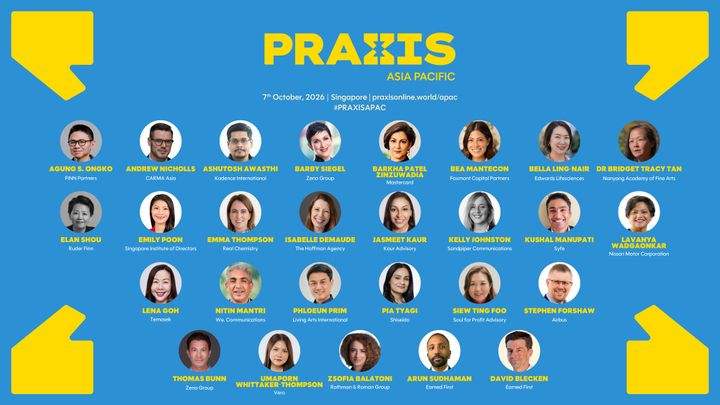
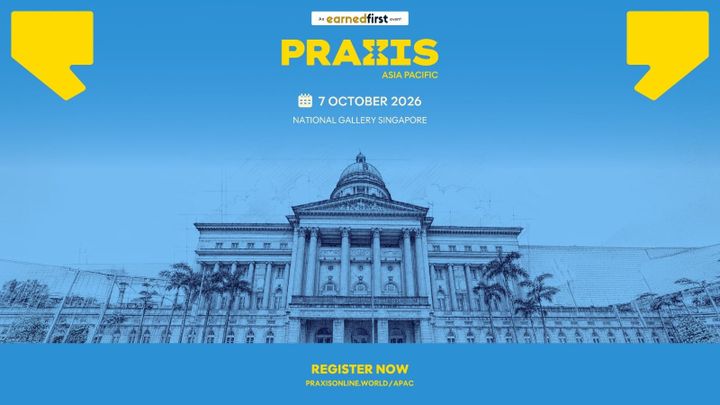
The Narrative Crisis was convened by Zeno Group and Earned First on 29 April 2026 in Singapore. The PRAXIS Asia-Pacific conference returns to Singapore on 7 October 2026.

Comments ()