
The quiet crisis undermining global PR | Partner Content
As global and multimarket budgets erode, the industry risks losing a core revenue stream. Reclaiming it demands new models, fresh thinking, and renewed focus on chemistry and culture, argues The Hoffman Agency's Caroline Hsu.

The communications industry has always lived in flux. But even for those of us who’ve weathered two decades of disruption, the level of unpredictability today feels different. From AI breakthroughs transforming daily life to ever present geopolitical tension, sliding budgets and shrinking newsrooms, the pace and pressure of change has never been so intense or relentless.
We’re now operating in a world of compound crises and shrinking certainty, and the industry’s numbers show it. Over the past two years, brands have slashed ad production budgets by 30% to 50%, while PR agencies are posting the lowest growth and profitability figures in years. In 2024, North American firms reported average net revenue growth of just 1%. Profitability is falling too, with average operating profits down to 16.6%, the lowest since 2019, showing that budget cuts and consolidation are taking their toll.
Endangered multimarket assignments
Beneath the headlines lies a quieter, more existential threat: the slow unraveling of global and multimarket remits. These assignments once anchored international pipelines and helped drive scale and influence across networks. Today, they’re being quietly sliced into regional RFPs, scattered across siloed teams, or absorbed in-house. Flagship global campaigns are increasingly fragmented: delivered in isolation, briefed market by market, or not briefed at all.
The shift hasn’t been loud, but it’s been steady. To put it starkly, we are gradually losing one of the strongest engines of agency growth and margin. If we don’t act, the industry is likely to become smaller, more fragmented — and easier to cut out of the picture entirely.
Not long ago, the traditional hub-and-spoke model with strategy set at the center and local execution served many companies adequately. But today’s rapid-fire news cycle makes that structure a liability. Stories erupt, morph, and cross borders in minutes, with reputational consequences just as fast. In a 2024 industry survey, 92% of PR professionals said work-related stress had impacted their mental health, with top triggers including coverage pressure and the volatile news agenda.
And volatility is now the default setting. AI has gone from concept to critical infrastructure, supply chains and reputations are being reshaped by tech bans and tariffs and political and social upheaval are the norm. Not to mention the Donald Trump effect: eleven months into his second presidential term, we’ve seen near-weekly shocks to global markets, tech regulations, and international relations. Each impulsive tweet or tariff threat can trigger geopolitical fallout and send communicators scrambling across time zones, often with little warning and even less alignment. In this world, the hub-and-spoke model is a risk we can’t afford.
The bigger danger is that this chaos is chipping away at global and multimarket remits. Cracks in delivery and operations show that many agency models just aren’t built to handle the speed, complexity, or coordination that clients now need. This means briefs spanning more than two or three markets are becoming rare. Even brands that used to default to regional or global scopes now often brief country by country, citing budget restrictions and the complexity and coordination headaches of managing across borders. When big multimarket and cross-region briefs do surface, they can be more fragmented, with shorter time frames and smaller budgets. The trend is clear: truly multimarket work is getting harder to win, and even harder to hold.
This is a problem, because these remits are what make agencies perform at their best in terms of unified storytelling, brand alignment and reputational risk management. They lead to stronger results and healthier margins, especially in emerging markets. In many ways, they’re the reason global agencies exist. If they dry up, what happens to the very model most international firms were built on?
New model is overdue
It’s clear that the traditional multimarket hub has outlasted its usefulness. For all the talk of global synergy we hear today, the architecture remains much the same, with legacy systems built for internal control, not integrated delivery. Agencies pitch international reach and cross-market collaboration, but once the contract is signed, the reality often looks very different. Markets revert to silos, regional leads protect margins and projects get carved up by individual P&Ls. What begins as a promise of seamless integration quickly devolves into a fragmented nightmare. If we’re honest, many ‘global’ agencies don’t really work globally at all.
The trouble is that the typical agency structure pushes people apart when what’s needed is the opposite. The real advantage in a tech-accelerated, high-stakes environment isn’t just scale, it’s chemistry. Clients don’t need more vendors, rather a team that speaks the same language, moves with instinct, and knows how to shift resources and messages with precision. Like being able to reroute a planned event in Jakarta overnight when political protests erupt. Until operating models reflect that, even the sharpest strategies will fall flat.
True global comms success now demands a fluid model with teams that are connected, empowered, and built for speed. The best multimarket setups don’t follow a rigid chain of command but operate like a neural network or hive, with every market switched on and working processes that enable information to flow freely and teams to act in real time. When disruption hits, you need people who already know each other and the brand — and what to do when a pivot is required. Mindset alone isn’t enough. Agility must be hardwired into the way we operate. That means faster decision-making, flexible resourcing, smarter distribution of responsibility, and a structure that supports, not stifles, collaboration — ideally with a single P&L.
If we can’t operate as truly connected, multimarket teams, what’s the point of having a global network at all? We still believe in a future with multimarket RFPs, but getting there calls for fresh thinking, operating models built for speed and trust, and above all, a commitment to do the hard work of real collaboration. Global teams still matter. But only if they can act like one. The ones who figure it out won’t just win the top-drawer assignments; they’ll define what the future of this industry looks like.
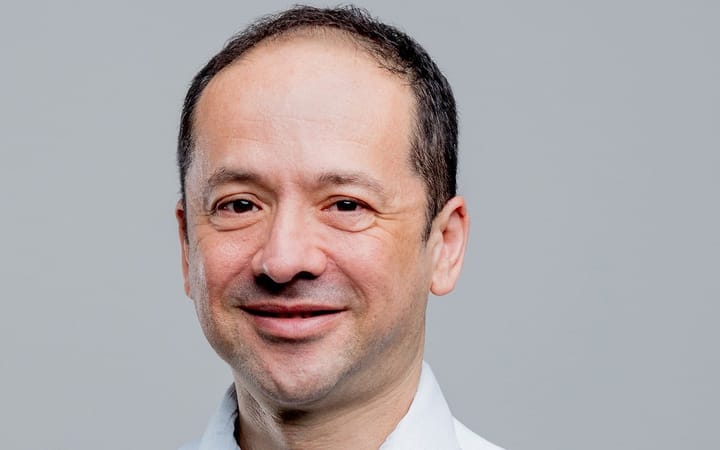
Caroline Hsu is chief global officer with The Hoffman Agency. This article is Partner Content, produced in collaboration with The Hoffman Agency.

Comments ()