
38 years of reinvention | Partner Content
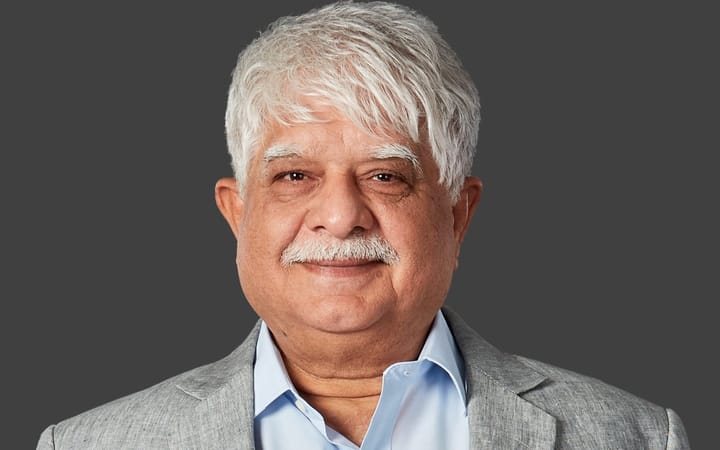
In this edition of Independents’ Day — Earned First’s monthly series in partnership with PROI — Andreas Fischer-Appelt reflects on nearly four decades of change in communications, and what constant reinvention now demands of leaders.

In a monthly column called Independents' Day, Earned First is partnering with PROI to explore how independent PR firms are navigating industry disruption while preserving their competitive edge.
In our fourth instalment, we speak with Andreas Fischer, partner and co-founder of fischerAppelt, about 38 years of reinvention in communications. He reflects on what this evolution means for creative leadership, organisational trust and the growing expectation that communicators shape decisions, not just narratives.
- You've seen every major reinvention of marketing communications. Which shift do you think was truly transformative — and which was overhyped?
The shift from TV advertising to social first, and the evolution towards digital content and the measuring of results around performance marketing has been a major change. For PR specifically, the change has been around the transition from traditional media relations to content marketing and being more relevant in the overall marketing mix.
It isn't just about new channels; it's a profound re-orientation of how brands interact with audiences. Our social first approach signifies a shift from monologue to dialogue, empowering audiences and democratising communications. Digitalisation provides unprecedented access to data, allowing for granular measurement and optimisation, transforming marketing from a purely intuitive art to data-informed science. Crucially for PR, this means elevating beyond mere press clippings. Public relations now crafts compelling narratives, builds communities and deploys content across a myriad platforms, directly contributing to overall marketing and business objectives. It's about earning attention and trust through authentic engagement, not just placing stories.
2. fischerAppelt is among the first creative groups in Europe to institutionalise AI. What's your framework for integrating it responsibly and effectively across 700 staff?
Our approach is dual-pronged and deeply integrated. Firstly, our expert groups serve as an AI R&D hub, developing customised solutions – using AI for predictive media analysis, generating hyper-personalised content at scale, as well as sentiment analysis for crisis management. This ensures cutting-edge capabilities. Secondly, our agency prioritises agency-wide AI literacy. Training all 700 staff isn't just about familiarising them with tools; it's about creating an understanding of AI's ethical implications, data privacy, potential biases, and how it can augment human creativity rather than replace it. This ‘democratising’ of AI knowledge is preparing each one of our staff members for an AI-powered future. And by also training our clients, we have positioned ourselves as trusted advisors and partners.
3. How do you maintain a distinct creative philosophy in an era when technology can homogenise output?
While technology and AI can plan and measure everything, we believe that great creative campaigns come with emotions that can't be created by data and numbers. We value creative thinking and excellent ideas, and winning awards serve as our proof points.
This speaks to the value of human ingenuity. In an age where algorithms can optimise efficiency, there's a risk of generic content. FischerAppelt champions the human element as the ultimate differentiator. Data can illuminate paths and validate our hypotheses, but true creative breakthroughs – those campaigns that resonate deeply, evoke emotion and spark conversation – originate from intuition, cultural understanding and imaginative leaps.
4. Germany has a proud innovation heritage – has that shaped how you think about communications strategy?
Germany has a legacy of engineering and industrial prowess which means our products' inherent quality were often sufficient for market success. This has shifted. In today's hyper-transparent and global world, differentiation is challenging, and a compelling communication strategy is now a non-negotiable. The digital age has democratised media, allowing new voices from influencers and social communities to shape narratives. For brands, this means communication is less about broadcasting and more about earning authentic engagement. It's about crafting stories that resonate, sparking conversations and building genuine relationships that ultimately capture and retain public attention – the very essence of earned media.
5. What do you think European independents can teach global networks about creative agility?
Independent agencies are agile. Our flatter structures and direct connection to clients as well as our understanding of cultural nuances allow for quicker decision-making and a quicker response time to trends. While global networks might leverage their vast resources, independents, often by necessity, are masters at generating genuine earned media, proving that influence is built through credibility and relevance, not just bought impressions.
6. If you were to imagine the agency model of 2035, what would it look like — and what skills will define the winners?
We envision an agency model where technology serves as an enabler, providing data-driven insights while automating repetitive tasks. This frees human talent to focus on higher-value activities. The winners of 2035 will use sophisticated AI tools to empower, rather than replace, human expertise. This elevates the roles of experts, creatives, strategists and planners whose capacity for critical thinking and innovative idea generation will be paramount. Also, the role of the client manager becomes pivotal – they have to interpret complex data, provide counsel and nurture relationships. Ultimately, success hinges on “relevance”. Agencies that can consistently connect brands with their target audiences in authentic, meaningful ways, proving their ongoing value by earning attention and trust, will truly thrive in 2035 and beyond.



Comments ()