Comms beyond consensus
A World Economic Forum shaped by geopolitical rupture and AI acceleration is forcing corporate communicators to rethink how trust, legitimacy and influence are earned.
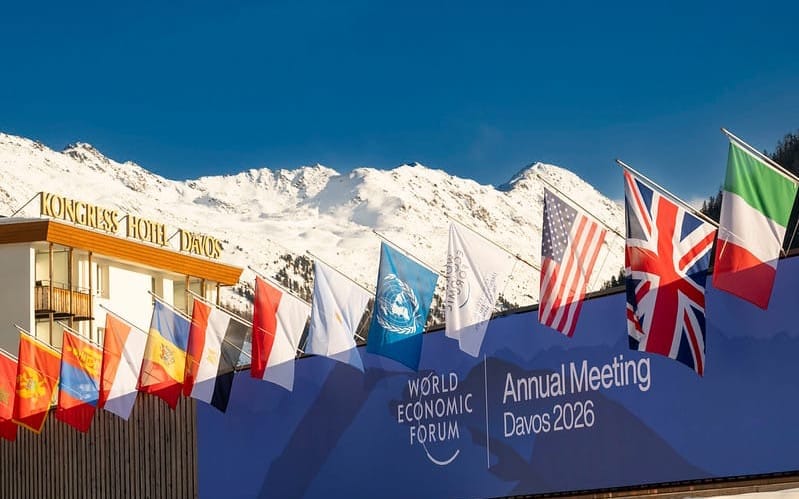
It is always hard to know exactly what to make of Davos. The weeklong embrace of elitism defies easy categorisation, serving as it does as a forum for political and organisational leaders of all stripes. As former World Economic Forum stakeholder engagement head Georg Schmitt likes to say, Davos is more of a mirror than a compass, and we don’t have to like what it displays.
Perhaps this idea of mirrored realities can help us make better sense of events on the Promenade. For every observation or prediction that emerges from the Forum’s frenzy of conversation, it is tempting to suggest that the opposite is also true.
Thus you could conclude, for example, that Davos is either more important or less relevant to a world increasingly defined by competing interests. WEF serves as a platform to improve the state of the planet, or a convenient excuse to make deals while offering up platitudes about social progress.
AI, the week’s most popular topic alongside geopolitics, is a huge opportunity for business, or a harbinger of doom for humanity. Despite a record number of sessions on climate, ESG and sustainability were barely visible as thought leadership themes. Multilateralism matters more than ever, even as the lack of Global South voices remains striking.