
PRAXIS A-P: Cultural intelligence is more than a data point
As technology makes information more accessible, communicators still have a duty to decode the nuances and experiences that shape thought and behaviour.
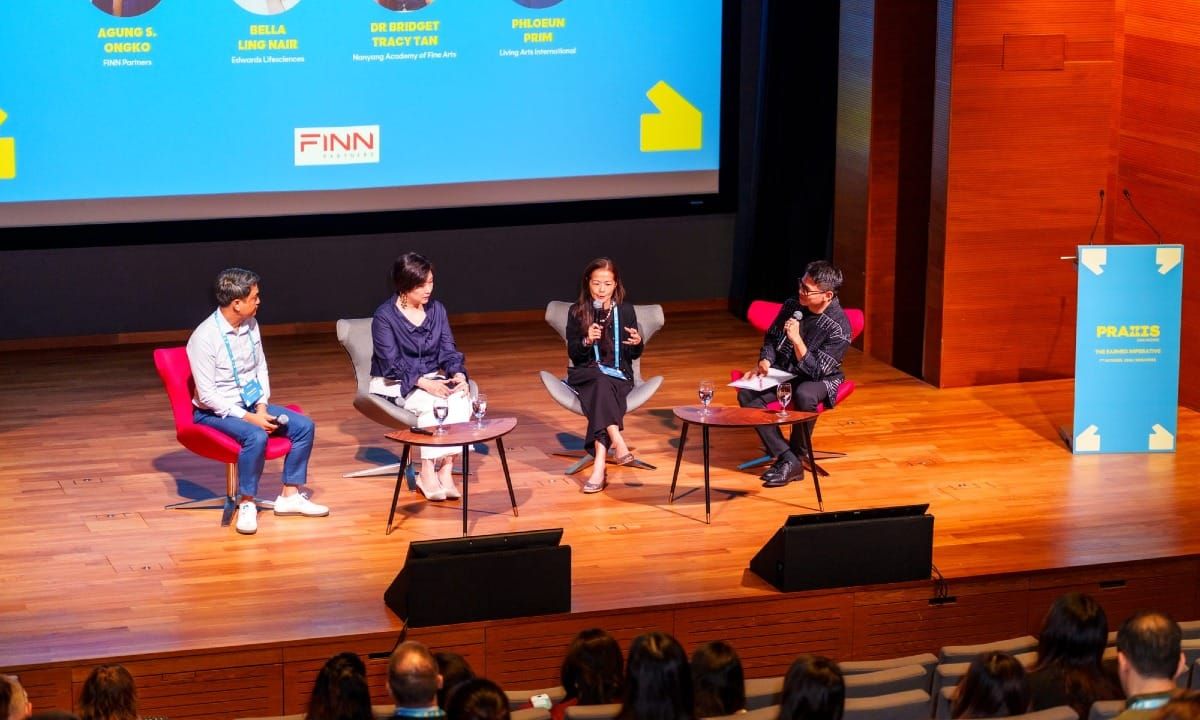
Does anyone know what a spirit sounds like — or how it articulates itself in a particular language? That was one unexpected question raised for consideration in a far-reaching discussion about how to develop and maintain cultural intelligence in the age of AI.
Dr Bridget Tracy Tan, director of the Institute of Southeast Asian Arts at the Nanyang Academy of Fine Arts, posed the question to make the point that humans, and AI, make assumptions that lead to biases encompassing everything from gender to generations. Recognising this, and taking the time to form direct, "site-specific" experience, is central to the formation of cultural intelligence at a time when, more than ever, the world's information seems accessible at the touch of a button.
A recent UNESCO report highlighted culture as "the missing sustainable development goal". Asked how she goes about cultivating cultural intelligence, Tan said she sends her students to locations around Southeast Asia to interact with local communities and discover their "human scale", which is not discernible through technology. Giving the example of Bajang, an ancient ceramic-producing village in Vietnam, she added that industry sometimes precedes culture, which evolves from the memory of things and from language. AI can provide summaries and translations that "don't sound wrong, but don't sound right either" because they fail to pick up on nuance, which is only perceptible through physical presence.
Moderating, Agung S Ongko, senior partner at Rice, made the point that when operating in a corporate context, it can be difficult to give due consideration to cultural intelligence. Bella Ling-Nair, JAPAC vice-president of communications, patient advocacy and branding at Edwards Lifesciences, agreed that "corporate context" can dominate work but noted that in her field "cultural intelligence is not optional" because it relates directly to patient outcomes.
"If you fail to connect the culture, the patient outcome [of a treatment] would be completely different," she said. "I talk to patients, customers, local employees every day. What I have learned is that cultural nuances actually affect the patient journey." They determine how patients and their families interpret medical information, how they communicate with doctors, and policymakers' attitudes to medical products. Amid AI assistance, "listening becomes a critical part of our job, especially when it comes to patient advocacy. Because [AI and] data can tell you what's going on, but cultural intelligence can help you understand why it matters, and how you can actually help the patient in their journey".
Ling-Nair added, "empathy is the biggest technology we have... Innovations come second. It's how much you can put yourself in the patient's shoes."
Ongko made the point that translating between "different spheres" can be difficult even if the language is the same. Giving the example of the panel, which included an arts educator, a healthcare corporate communicator and a community leader, he noted that "we are all speaking slightly different languages even though we are all speaking English. Whether translating a recognised language or the language of a particular field, paying attention to cultural nuance is vital, Ling-Nair said, including when using machine translation. "Communication is not about how or whether the messages are being heard, it's whether your messages are making an impact," she explained.
Phloeun Prim, executive director of Living Arts International, made the point that overreliance on technology risks losing "transmissions", in particular, the cultural intelligence that comes from oral traditions, which are prevalent in much of the 'Global South'. He recalled feeling, at the Singularity Leadership Program in Silicon Valley, that narratives from Southeast Asia to Africa were being "completely missed out in the global map". As well as operating a project called 'An AI of our Own' in an effort to "reappropriate AI in our own terms and keep it human", Prim engages with communities with the goal of preserving data that currently exists in oral tradition.
Summing up, Ongko reminded the audience, "AI gives us all the tools to access ever more information, but that doesn't equate to cultural intelligence. It's in our hands as humans to take accountability for the impact that we are making with the stories we tell and the narratives we share."
Comments ()