When signals fade
As politicians lean into vice, business leaders are seeking quietude
Since war with Iran broke out, the Trump administration has taken its typically combative cultural stance in a new direction. First came the videos, one of which enlisted SpongeBob SquarePants, designed to make real death and destruction look like a video game. Then came the AI-generated images of the US president as the pope and, apparently, as Jesus himself (Trump claimed it depicted him as a doctor).
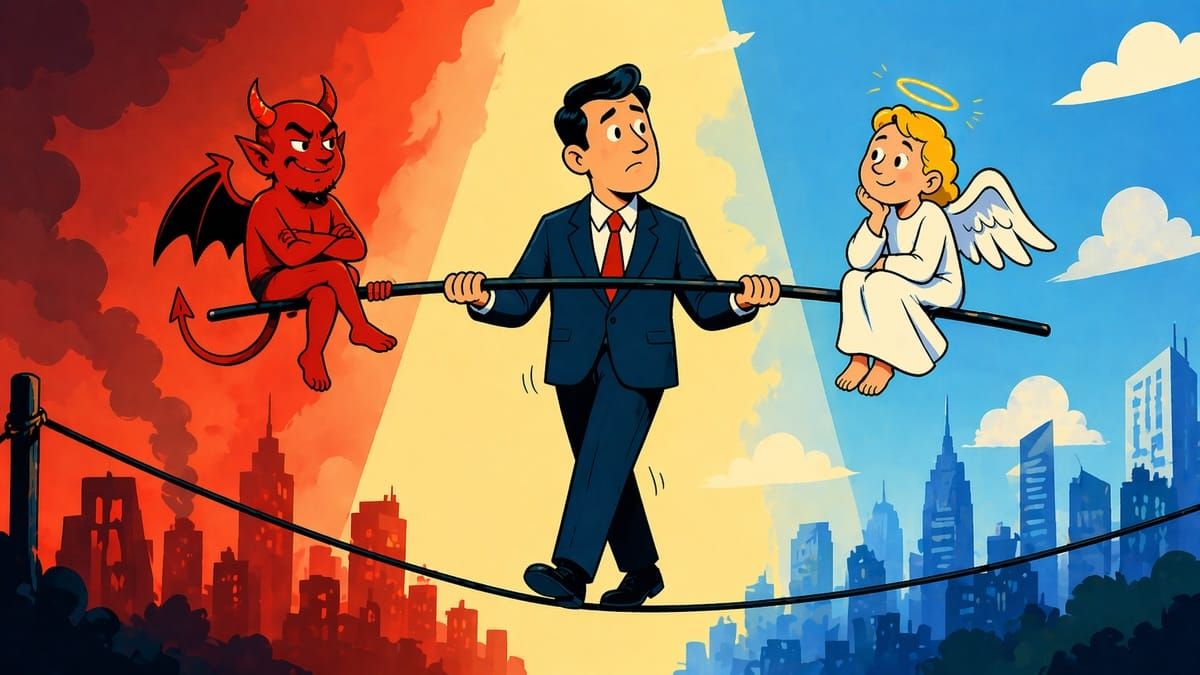
Up to this point, Trump had made an effort to appealing to the Christian right by appearing to do the 'virtuous' thing, however insincere that may have been. Locked in a war of words with Pope Leo XIV and others who oppose America's poorly planned attack on Iran, he has gleefully cast aside the need to seem virtuous and leaned into his sense of 'vice'.
Of course, courting controversy has always been part of Trump's playbook. But his antics are usually calculated to appeal to the home team while angering progressive liberals. By contrast, the most recent round of 'vice signalling' has upset people whose support he depends on.
The benefits of vice signalling — which essentially denotes a public show of rebellion and rejection of moderate social norms — are often unclear. Nevertheless, it appears to be on the rise in politics from America to Asia, with some spillover into business.