
Why communicators must shape decisions | Partner Content
In this edition of Independents’ Day — Earned First’s monthly series in partnership with PROI — Madan Bahal explains why strategic depth and judgment matter more than scale or service sprawl.
In a monthly column called Independents' Day, Earned First is partnering with PROI to explore how independent PR firms are navigating industry disruption while preserving their competitive edge.
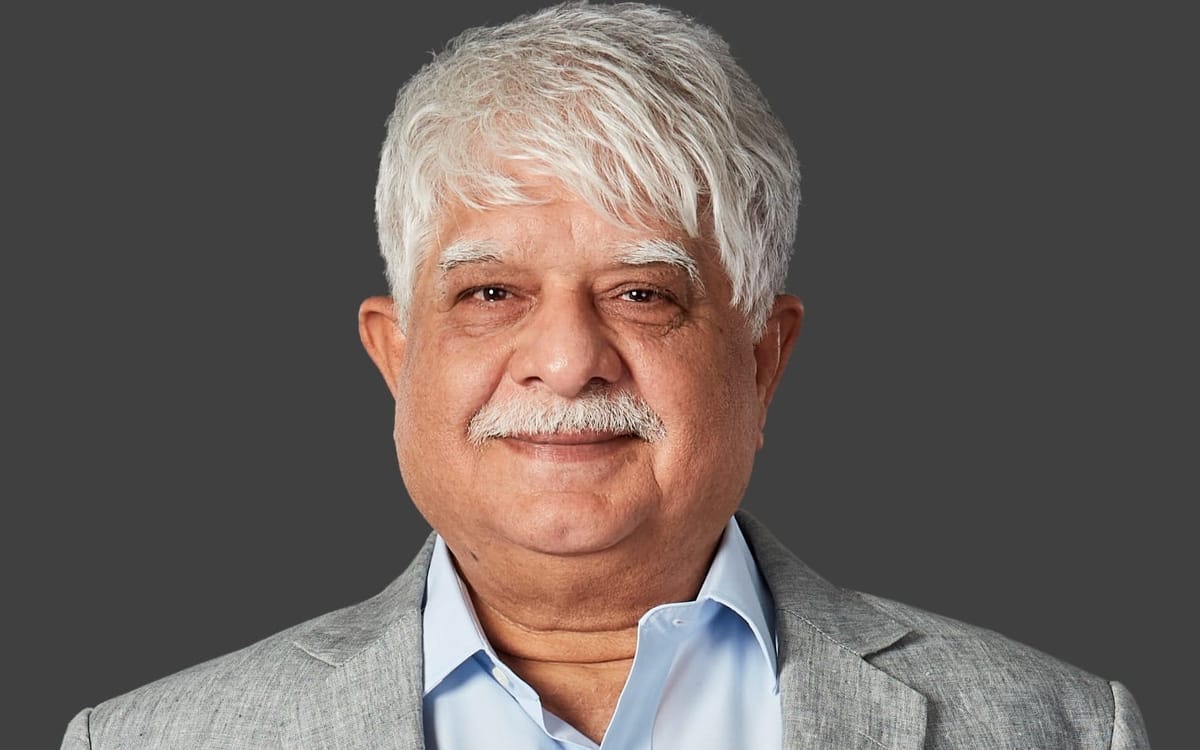
In the fifth instalment of Independents’ Day, Adfactors PR founder and CEO Madan Bahal reflects on building a firm around reputation, risk and earned influence, arguing that in a slowing, AI-disrupted market, strategic depth and judgment matter more than scale or service sprawl.
- You’ve built Adfactors around complex business and reputational challenges rather than consumer-style storytelling. Why do you think this focus has endured in a rapidly changing market?
A good PR firm can thrive in any segment it chooses to operate in because there is tremendous opportunity across the spectrum of practices and sectors. This is even more true for a market like India.
Each firm makes its choices based on its legacy, strengths and aspirations. We have a strategic fit with reputation and critical issues, driven by a foundational strength of earned influence. This focus has helped us over a long period of time. Of course, there are significant changes in every aspect of this work – we have to continuously adapt to stay relevant. Survival itself is at stake – market forces will drive the change.
- As India’s economy and capital markets deepen, how are corporate and reputational risks evolving — and how should communications leaders respond?
There is an explosion of business risks in the post-pandemic, post-war, post-climate, post-ChatGPT and post-Trump world. Each of the business risks represents inherent reputational risks. So there is a plethora of risks to mitigate. Communication leaders now have to be adept in understanding risks and providing counsel and programs in mitigating or addressing those risks.
There is another aspect that the risks can originate anywhere in the world. Firms therefore need to have resourcefulness and agility to provide solutions across key markets of the world. Adfactors PR is a partner of PROI Worldwide – the largest network of independent PR firms. PROI helps us to expand our service footprint in most of the key markets of the world.
- Many agencies chase growth through breadth. You’ve emphasized depth. What are the trade-offs of that approach, especially in a hyper-competitive market like India?
One has to make choices – give up a few things to do some other things very well. We have chosen a battlefield that represents a significant opportunity for our limited ambitions. The trade-offs are giving up low-margin, commodity-type marketing communications work which is increasingly under threat in an AI-driven environment.
- Crisis preparedness is often discussed, rarely practiced. What distinguishes organizations that genuinely manage reputational risk well from those that merely react?
This is actually quite amazing – many businesses actually wake up only after the crisis hits and they pay a heavy price for previous inaction. Organizations that manage reputation risk well are fundamentally driven by self-aware and conscientious leadership. Good corporate behaviour contributes to 90% of reputation. That said, crisis can come from unexpected quarters at the most unexpected time even to good businesses. Hence, the simple rule is being prepared. Reputation and crisis audits must be bi-annual features in any good organization. Communication folks must work close with the Chief Risk Officers and have a good sense of what boards are maintaining in the risk register.
- What skills or mindsets do young professionals need if they want to work on complex, high-stakes communications rather than surface-level narratives?
Besides good communication skills, an understanding of business, risk and the media environment is important to get started. One needs the ability to quickly make sense of a situation – thus, a basic research and an analytical orientation is important. Good consultants must be well read and have analytical competence to make sense of data points that point to problems. They must also have an ability to do original whiteboard thinking to draw customized plans - because each complex problem is unique. Templates and good English alone don’t work here.
- Having shaped the industry for decades, what worries you most about the future of public relations in India — and what gives you confidence?
We have played a humble part in the Indian context – there were many wonderful firms like Genesis, Perfect Relations, Hanmer and Sampark who shaped the industry in the 90s and the following decade. Like Eklavya in Mahabharata, we learned a lot from them.
But the world has changed irreversibly and the impact on the PR industry has been visible since 2023. The combined effect of pandemic, wars, geopolitics, climate, AI and societal polarization has created an unusual level of complexity. The rate at which the PR profession and the industry are adapting is relatively quite poor. We are witnessing growth stagnation around the world.
What gives me confidence is the scale of the problems to be solved and the inherent opportunity. Finally, I am confident that the industry will evolve to fill the void.




Comments ()