
How independents scale | Partner Content
In this edition of Independents’ Day — Earned First’s monthly series in partnership with PROI — James Brasher discusses how resilient independent agencies grow without losing what made them worth acquiring.

In a monthly column called Independents' Day, Earned First is partnering with PROI to explore how independent PR firms are navigating industry disruption while preserving their competitive edge.
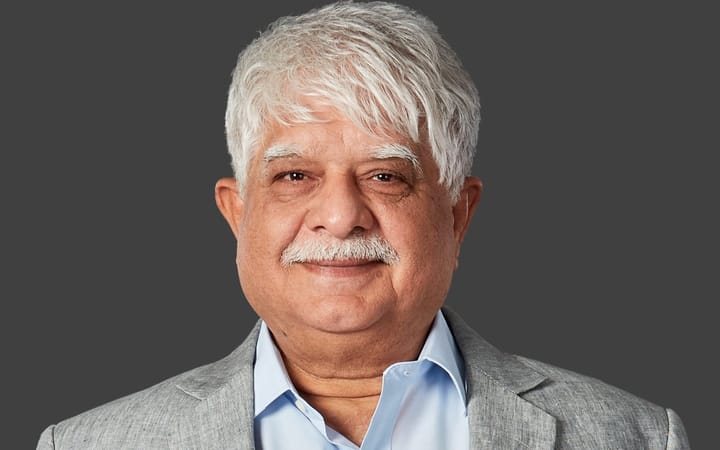
In the sixth instalment of Independents' Day, James Brasher, managing partner at RICE, discusses building across five culturally distinct APAC markets, the values that held the firm together, and the real trade-offs of joining a global network.
- RICE built its APAC footprint across Singapore, Hong Kong, Thailand, Myanmar and the Philippines — markets with genuinely different media cultures and client expectations. What has managing that regional diversity actually looked like in practice?
It’s certainly not been a one-size-fits-all approach. The diversity in the markets we operate in is considerable. There’s always a risk when entering a new market that you assume a formula that’s worked elsewhere will simply work there. While efficiency and alignment have benefits, you also have to adapt to each market’s maturity, culture and expectations.
I believe that leadership is about people. Each of the markets we operate in obviously has its own media and business landscape, pace, and communication style, so we’ve never approached APAC as something that can be managed in a standardised way across markets. Instead, a big part of the job is listening closely to our local leaders and teams, understanding what success looks like in each market, and then giving them the support and flexibility to operate in a way that makes sense locally.
- "Independent" means different things across APAC — in some markets it signals agility, in others it raises questions about scale. How do you make the independence narrative land credibly with large regional clients who have options?
Most clients know that the success of any partnership ultimately comes down to the people working on their account. There are strong teams in both network and independent agencies, and while using the same agency across multiple markets can create efficiency and consistency, what clients ultimately care about is whether you can deliver at scale, across markets, and with the quality and consistency they need. Clients should choose the team that’s the best fit for them and their needs in any given market, regardless of whether it’s independent or part of a network. Fortunately for our clients, as part of PROI we have access to a global network of strong agency partners, in addition to FINN Partners’ own network.
Where independents have an advantage is in the freedom to operate with more agility. One of the key reasons RICE has retained large regional clients over many years is our ability to listen and adapt quickly. Decisions can be made faster, and solutions can be shaped around what the business and client actually need rather than having to be forced through layers of bureaucracy. That can be harder to achieve in environments where leaders have less flexibility to respond to what clients really need.
- The FINN Partners model allows affiliates to retain identity while gaining global network access. What has that meant for RICE day-to-day — what's changed, and what has deliberately stayed the same?
The benefit of joining FINN Partners was the opportunities it opened up for our team and clients. Day to day, the biggest changes are our network of offices has grown and we have access to expertise, tools and capabilities we didn’t have previously. This has created new opportunities to collaborate and given us a greater ability to bring clients more integrated support when they need it.
One of the key reasons we became part of FINN Partners was the cultural and values alignment. Because of that, what hasn’t changed is our culture, our leadership style, our understanding of APAC markets, and the way we build client relationships. FINN Partners gives leaders a lot of autonomy to manage the business in a way that makes the most sense for the market and context. That means the qualities that made RICE successful in the first place, our identity, entrepreneurialism and deep local understanding, have not just been preserved, but strengthened.
- For other independent APAC agencies considering a similar partnership — what's the honest case for it, and what are the genuine trade-offs they should think through?
Obviously it’s different for every agency, but if you’re at a stage where the opportunities for your team and clients would be significantly accelerated by being part of something bigger, then it’s worth considering.
The trade-off is that you won’t have the autonomy you once had. You become part of a larger organisation with its own policies, norms and ways of doing things, so there’s potential for disruption and discontent. That’s why chemistry and values alignment matter so much. When those things are in place, it reduces the risk of having to change the way you operate and people feeling this isn’t what they signed up for.
Key is finding a partner that respects the value you’ve built and understands how you built it. The partnership should be about combining your local identity and capabilities with broader global reach, while still allowing you to operate in a way that is true to who you are. If that’s not in place, the trade-offs could outweigh the benefits.
- Culture is invoked constantly in agency life but rarely measured rigorously. How do you actually know your people-centred approach is working — what are the indicators you trust?
We look at things like retention, team and client tenure, career progression, and feedback tracked through our staff surveys. You can see strong culture reflected in client outcomes, which then show up consistently in the bottom line over time. Beyond the numbers, there are other indicators like whether people feel they can speak up honestly, how teams work together without politics, and whether leaders are accessible. Being genuinely people-centred creates teams that are more committed, lower on ego, better at collaborating, and more willing to go the extra mile for colleagues and clients. In short, it’s a combination of the numbers and how people show up.
- Which market in your current footprint do you think is most underestimated by international PR observers right now, and why?
We operate in a number of countries where there’s plenty of opportunity, not to mention Southeast Asia as a whole. I think many markets in the region are viewed from the outside as being secondary, when in fact they offer significant opportunity, have large populations and developing economies, and are culturally rich.
The Philippines is a clear example of this. It has a dynamic communications environment, a large population, and is one of the more digitally engaged markets in the region, where influence and reputation are shaped by a strong local mix of traditional and social channels.



Comments ()