
When data isn't enough | Partner Content
In this edition of Independents’ Day — Earned First’s monthly series in partnership with PROI — Doy Roque explores the impact and limits of data-driven communications in the age of AI.

In a monthly column called Independents' Day, Earned First is partnering with PROI to explore how independent PR firms are navigating industry disruption while preserving their competitive edge.
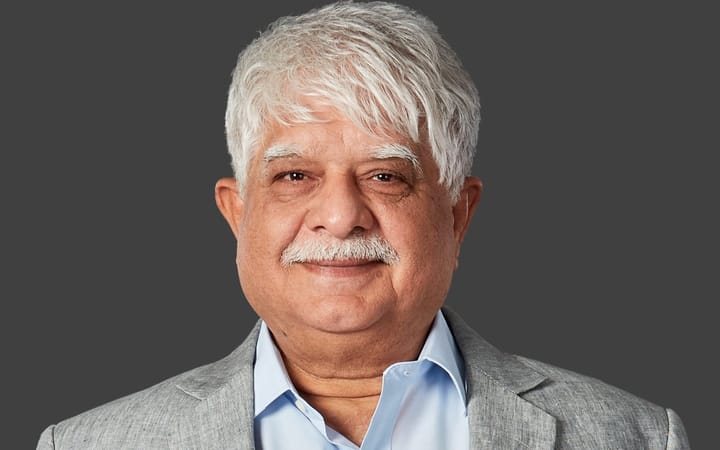
In the seventh instalment of Independents' Day, Doy Roque, founder and CEO at M2.0 Communications, examines where data genuinely improves communications decision-making, where it falls short, and why imagination may be the industry's most underrated capability in an AI-driven world.
- The industry talks constantly about being "data-driven," yet much of communications still relies on instinct and experience. Where do you think data genuinely improves decision-making — and where is it being overstated?
The gap between talking about data and actually using it is more revealing than either side of your question. I run a data-driven agency. I built a media analytics platform. And I can tell you honestly that we fail at placing data at the center of our decisions more often than I would like to admit. The resistance isn't a market problem or a skills problem. It lives inside my own organisation, in every strategy session, in the friction between what the numbers say and what experienced people feel.
That is not a failure of intelligence. It is something older than that. When we say AI can't empathise, or that clients buy from people not machines, these aren't really arguments. They are epicycles, the same move Ptolemy's successors made when inconvenient data started accumulating. Just add another layer of complexity and keep the old model turning a little longer.
Humanism, in its current form, placed individual human genius at the center of meaning-making. Communications inherited that belief completely. The celebrated strategist, the instinctive account lead, the award-winning creative director: these are humanist archetypes. And we are, right now, in the mourning phase that every previous generation went through when their archetype was displaced.
Where does data genuinely help? Media monitoring that catches a narrative shift before it becomes a crisis. At M2.0 we have used this repeatedly to get clients ahead of stories that pure instinct would have missed entirely until it was too late. Audience parsing that challenges assumptions: who clients think is listening to them and who actually is are consistently different populations, and that gap matters enormously for strategy. We have experimented with message testing, though honestly not enough of it. What little we have done suggests that what clients want to say and what their audiences actually need to hear are often two completely different things. That gap alone justifies more rigorous testing than most agencies, including ours, currently practice.
Where is it overstated? Start with the thing everyone finds hardest to admit: nobody has figured out how to reliably predict what will move people emotionally. Whether a story will resonate, whether a campaign will feel true rather than manufactured, whether an audience will care. Agencies that claim their models can do this are overselling.
Cultural nuance is another honest limitation, particularly in markets like the Philippines where a relationship built over years carries more weight than any index, and where the data infrastructure to capture those dynamics simply doesn't exist yet. And then there is crisis judgment. When things are moving fast, data lags. You need a human in the room who can read the temperature, make a call, and live with the consequences.
- How has the rise of analytics changed the way you think about strategy, not just reporting and measurement?
The honest answer to this question has less to do with strategy frameworks and more to do with anxiety.
I have always been an anxious person. There is a long family history of it. And for many years, the way that anxiety expressed itself professionally was through a kind of instinct-driven certainty: I know what this campaign needs, I know what this client should do, I know what story will land. That certainty felt like confidence. Looking back, it was mostly ego with nowhere to put its doubts.
What data did, gradually and somewhat painfully, was give those doubts somewhere to go. I want to be careful about how I describe this because it was not a clean or comfortable process. My journey toward genuinely data-driven thinking took more than a decade. It was punctuated by panic attacks and, I am told, some fairly memorable emotional outbursts. My colleagues at M2.0 lived through that with me and I am grateful for their patience.
What I was experiencing, though I couldn't articulate it at the time, was the slow collapse of a mental model I had built my professional identity around. Every time new data presented itself and contradicted what I believed to be true, something in me resisted it physically before I could process it intellectually. That is not a rational response. But it is an honest one.
Two moments stand out as pivotal, though there were many. The first was realizing that the traditional agency-client model was structurally designed to keep us small. We were captive to our clients' whims, our growth limited by their budgets and their appetite for what we could offer. The data made this visible in a way that gut feel never would have, because gut feel was too invested in the relationships to see the trap inside them.
The second was harder. I realized that a significant portion of our campaign decisions were being driven by ego rather than evidence. Creative directors, clients, sometimes myself, saying "let's do this because I like that." Not because the audience data supported it. Not because the strategic logic demanded it. Because someone in the room had a preference and enough authority to make it happen. That kind of decision-making was quietly bankrupting us, in ways that only became visible when we started looking honestly at outcomes rather than outputs.
What analytics actually changed, at the strategic level, was my willingness to be wrong earlier in the process. Before, strategy was built on conviction. You committed to a direction, you defended it, you measured success in ways that confirmed the original decision. Data interrupted that loop. Not always comfortably, but consistently.
Audience parsing was where this showed up most starkly. Who clients believed was listening to them and who actually was turned out to be different populations almost every time. That single realisation, repeated across enough clients, reshapes how you approach the entire strategic conversation. You stop starting from the message and start starting from the listener.
Media monitoring added another layer. Narratives shift in ways that feel invisible until they become crises. Having the infrastructure to watch those shifts in real time meant we could bring clients intelligence rather than just coverage. That is a different kind of strategic conversation entirely.
Data, done honestly, is humbling in a way that is ultimately liberating. It keeps redistributing your certainty to where it actually belongs, rather than letting it pool around your preferences. The strategic shift analytics produced in me was not really about tools or workflows. It was about learning to treat my own instincts as a hypothesis rather than a conclusion. That sounds simple. It took me the better part of twenty years.
- In emerging markets like the Philippines, what are the biggest barriers to meaningful data-led communications — access, skills, client expectations, or something else?
My answer is something else entirely. The biggest barrier to data-led communications in the Philippines, and I suspect in most emerging markets, is imagination.
In 2002 I was working at a PR agency called EON. One day I suggested to my boss that delivering clip reports by CD through a messenger was an idea whose time had passed, and that we should consider building an online media monitoring service instead. The suggestion was rejected almost immediately. I was devastated at the time. It eventually pushed me toward starting my own companies, which is a story for another day.
Looking back, I don't think my boss was being obstinate or short-sighted in any simple sense. I think he genuinely could not picture the future that the idea pointed toward. And that is a completely human response. The capacity to look at something ordinary, a CD in a messenger's bag, and see in it the outline of a different and better system, is not a faculty that most people operating under the daily pressure of running a business can easily access. Imagination, in that specific forward-looking sense, is rarer than we acknowledge.
The second barrier is related but distinct. Most people in this industry, and I include myself in this, are not naturally wired to treat assertions as hypotheses. We are trained, in schools, in agencies, in client relationships, to project confidence. To say "this campaign will work" rather than "we believe this campaign will work and here is how we will find out if we are wrong." Data culture requires that second orientation completely. It requires being comfortable with uncertainty in rooms where uncertainty is professionally costly. That is not a function of ignorance. It is a function of training and, honestly, of time. Most communications professionals are simply too busy defending their current positions to interrogate them.
There is also something worth naming that is specific to the Philippine context. In a culture where relationships and face-saving carry genuine social weight, presenting data that contradicts a senior person's belief is not just intellectually uncomfortable. It is socially risky. The data doesn't merely challenge an idea. It challenges a relationship, sometimes a long and carefully built one. That is a barrier that no amount of infrastructure investment or skills training will resolve on its own. It requires a different kind of organisational courage, and that courage has to come from the top.
Access and skills are real constraints, particularly in markets where data infrastructure is still developing. Client expectations are a genuine challenge, particularly among clients who have been told for years that communications is an art rather than a discipline. But these are problems that investment and education can address over time.
Imagination is harder. And the willingness to be wrong in public is harder still. Those are the barriers I spend most of my energy on, twenty years into this journey, and I am still not sure I have solved them.
- There's growing pressure to quantify reputation and trust. What can data measure well in this space, and what do you believe remains inherently qualitative?
There is an industry assumption that trust, like most things, will eventually yield to measurement. That if we build sophisticated enough instruments, construct robust enough indices, survey enough people often enough, we will one day have a reliable number that tells us where trust stands and what it would take to move it.
I am not convinced. And I say that as someone who built a media analytics platform specifically to measure things the industry said couldn't be measured.
The Edelman Trust Barometer is the most ambitious attempt to quantify trust at scale that our industry has produced. Now in its third decade, surveying tens of thousands of respondents across dozens of countries, it surfaces genuinely important macro patterns. It has tracked, for instance, the steady migration of trust away from institutions and toward personal circles, neighbors, family, employers, a shift that has enormous strategic implications for how organisations communicate.
But here is the honest limitation. The Trust Barometer measures declared trust. What people say they trust when asked directly in a survey. Declared trust and actual trust, the kind that governs real behavior under pressure, are often two completely different things. The instrument captures the shadow of trust remarkably well. The thing itself remains stubbornly out of reach.
I learned this most vividly through a campaign early in M2.0's history. In 2010, the Philippines was about to hold its first nationwide automated election. Our client was Smartmatic, the Venezuelan company contracted to run the automation. The stakes could not have been higher. Decades of election fraud had taught Filipinos to distrust the process of democracy itself. Now they were being asked to trust a machine, operated by a foreign company, to count their votes honestly. Every data instrument we had was telling us the same thing: the negative sentiment was overwhelming, the suspicion was deep, and the window to change public perception was closing fast.
What the data could not tell us was what would actually move the needle. That answer turned out to be Cesar Flores, Smartmatic's Philippine president. A man who carried himself with a warmth and an idealism that Filipinos recognised immediately as something familiar. People didn't just come to trust Smartmatic's machines because of transparency briefings or technical demonstrations, though those mattered too. They trusted them because they trusted Cesar. And they trusted Cesar because he reminded them of themselves.
So what can data measure well in this space? Direction and momentum. Data is excellent at telling you whether trust is rising or falling, where the pressure points are, which narratives are gaining traction and which are losing ground. Media monitoring can catch a reputational shift before it becomes a crisis. Audience parsing can tell you whose trust you actually have versus whose trust you think you have.
What remains inherently beyond measurement is the substance of trust itself. The moment of recognition between a person and an institution, or between two people representing institutions, that generates genuine belief. The cultural resonance that makes one spokesperson transformative and another forgettable. The accumulated weight of a relationship that makes an audience willing to extend the benefit of the doubt in a moment of crisis.
These things can be observed in retrospect. They can be felt in real time by someone paying close enough attention. But they cannot be reliably predicted or manufactured by any model currently available, and I am skeptical that they ever fully will be.
- As AI accelerates insight generation, do you see a risk of over-reliance on tools at the expense of human judgment? How should leaders manage that tension?
Every significant technology humans have encountered has changed not just what we do but who we are. Fire reorganised our social lives, our sleep, our cognitive capacity. The printing press didn't just reproduce text, it rewired how humans stored and retrieved knowledge, which rewired how they thought. The car restructured cities, families, the entire geography of human existence. The internet changed how we remember, how we navigate, how we form relationships and identities. In each case, humans didn't simply adapt to the technology. They became something slightly different because of it.
AI will be no different. And I say that not as a futurist but as someone currently building several AI-powered products across different domains. I am inside this technology in a very practical, daily sense. What I can tell you from that vantage point is that the transformation is already happening, and it is far more subtle than the over-reliance narrative suggests.
The real risk isn't that leaders will blindly trust an AI output they know came from a machine. The real risk is that AI reasoning gradually shapes human reasoning without anyone noticing. You adopt a tool. The tool influences how you frame problems. The framing determines what solutions you consider. And at some point the judgment you believed was yours is actually a thin layer of human instinct resting on top of machine logic. That is not a failure of the tool. It is simply what happens when humans and technology coexist long enough. It has always happened. It is happening now.
So the Turing dilemma, properly understood, is not really about whether AI can pass as human. It is about which human it will pass as. Because the human on the other side of this technological shift will not be the same human who walked into it.
This should alarm us a little. But it should also, if we're honest about history, reassure us a little too. We are probably the most adaptable species of any meaningful size on this planet. We have survived and been transformed by every technology we have ever invented, including the ones that seemed most likely to diminish us. We came out the other side of the nuclear age. We came out the other side of the internet. We will come out the other side of AI, changed in ways we cannot fully predict but recognisably, stubbornly human.
The leaders who manage this tension best will not be the ones who wall off some supposedly pure human judgment from AI influence. That is neither possible nor, I would argue, desirable. They will be the ones who remain conscious and intentional about how the technology is changing them. Who build enough reflective capacity into their organisations to notice when AI is serving their judgment versus quietly substituting for it. Who understand that the goal is not to resist the adaptation but to remain the author of it.
In communications specifically, that means never letting a tool make the final call on what is true about a human situation. AI can parse audiences, monitor narratives, generate options, stress-test assumptions. What it cannot do, at least not yet, is sit in a room and feel the temperature. Read a silence. Know when the data is technically correct and humanly wrong.
- What capabilities do communications teams need to build now if they want to be credible strategic partners in a data-rich environment?
Our industry has an over-reliance on the creative campaign as the primary measure of excellence. It is visible in the proliferation of awards and award-giving bodies that place campaigns on a pedestal above everything else. That culture sucks the air out of the room. Air that could be used to ask harder questions about failing business models, about the gap between what we charge for and what we actually deliver, about why an industry that claims to be in the business of understanding audiences invests so little in genuine research.
The deeper problem is one of identity. We have spent decades building our self-image around the consultant, the strategist, the creative visionary. We have systematically underinvested in our identity as researchers, innovators, and inventors. And that identity gap produces a specific and damaging outcome: a disdain, or at best an indifference, toward intellectual risk-taking. New ideas that threaten the existing model don't get debated. They get deflected. Or they go quiet in the room and resurface nowhere.
So, the first capability communications teams need to build is not a technical one. It is the capacity to sit with intellectual discomfort long enough to think clearly about what comes next. That sounds soft. It is anything but. In an environment changing at this pace, the inability to engage seriously with uncomfortable ideas is an existential risk. It leads, at best, to slow and painful decline.
The second capability is research literacy. Not data literacy in the narrow sense of knowing how to read a dashboard. A genuine understanding of what questions data can and cannot answer, how to design an inquiry, how to sit with ambiguous findings without forcing them into a predetermined narrative. This is the capability that transforms a communications team from a service provider into a strategic partner. Clients don't need agencies to execute campaigns they've already decided on. They need partners who can challenge their assumptions with evidence and help them see what they're missing.
The third is what I would call temporal imagination: the ability to think seriously about futures that don't yet exist and build toward them before the market demands it. It is the capability that separates the agencies that will thrive in an AI-driven environment from the ones that will spend the next decade mourning what they've lost.
PROI, at its best, is a structure for building all three of these capabilities collectively. Ninety-odd independent agencies across more than sixty countries, each with deep local knowledge and genuine entrepreneurial instinct, sharing intelligence across borders. The value of that network is not just referrals or global reach. It is the accumulated capacity to think across contexts, to stress-test local assumptions against global patterns, to borrow courage from partners who have already navigated what you are about to face. That is a rare and genuinely valuable asset in an industry that still largely thinks locally and reacts slowly.
The communications teams that become credible strategic partners in a data-rich environment will not be the ones that hired the most data scientists or bought the most sophisticated tools. They will be the ones that built the emotional and intellectual infrastructure to use those tools honestly, to be wrong in public, to follow the evidence even when it leads somewhere uncomfortable.
That is a harder thing to build than a dashboard. But it is the only thing that will last.



Comments ()